
Diesel prices remain one of the most critical factors affecting road haulage and logistics companies. Geopolitical tensions have a direct impact on freight transport costs, raising an important question: what does the industry really need to protect itself?
An Emergency That Shouldn’t Be an Emergency
Rising fuel prices are making headlines once again. Yet the question transport and logistics companies keep asking remains the same: why are we still forced to deal with this issue as though it were an unexpected crisis every time?
Italy’s — and more broadly Europe’s — dependence on external energy sources is a challenge that requires strategic, long-term structural solutions rather than temporary fixes. Whenever an international crisis erupts, the transport sector is among the first to feel the consequences.
Geopolitics and Diesel Prices: A Direct Connection
In recent years, fuel markets have experienced increasingly frequent and severe disruptions. Russia’s invasion of Ukraine triggered a dramatic surge in oil and gas prices. More recently, renewed geopolitical tensions in the Middle East have once again fueled instability across global energy markets.
For logistics and freight transport companies, the consequences are immediate and tangible: operating costs rise, profit margins shrink, and business planning becomes increasingly difficult.
This is why Italy — and Europe as a whole — must work decisively towards greater energy independence by diversifying energy sources and accelerating the transition towards more sustainable solutions that are less vulnerable to geopolitical volatility.
The Real Impact on Freight Transport
The effects of rising fuel prices are far from abstract. They can be seen in trucks standing idle in depots, haulage companies struggling to cover operating costs, and freight rates that no longer reflect the true cost of providing transport services.
Fuel accounts for approximately one-third of a road haulage company’s total operating costs, making it the industry’s most significant variable expense — often exceeding labour costs.
But the issue goes beyond economics alone. Road haulage is a vital component of a country’s economic and social infrastructure. Without efficient freight transport, food supplies cannot move, retail distribution chains are disrupted, and service stations cannot be replenished.
A sector of such strategic importance cannot remain exposed to recurring crises without adequate protection mechanisms.
What Is Needed: Automatic Freight Rate Adjustment Mechanisms
The solution does not necessarily require direct government financial support. Markets can regulate themselves — but only when clear rules and automatic adjustment mechanisms are in place.
For years, the road haulage industry has been calling for:
- Automatic fuel surcharge clauses that are triggered immediately when fuel prices exceed predetermined thresholds;
- Freight rates that accurately reflect actual transport costs, without forcing companies to renegotiate contracts downward simply to retain customers;
- Stronger and more unified industry representation capable of speaking with one voice on behalf of operators in institutional and regulatory discussions.
The issue of representation is far from secondary. Excessive fragmentation among trade associations weakens the negotiating power of the entire sector. What is needed is a system that genuinely prioritises the interests of transport operators rather than the internal dynamics of representative organisations.
The Driver Shortage: A Matter of Dignity and Fair Compensation
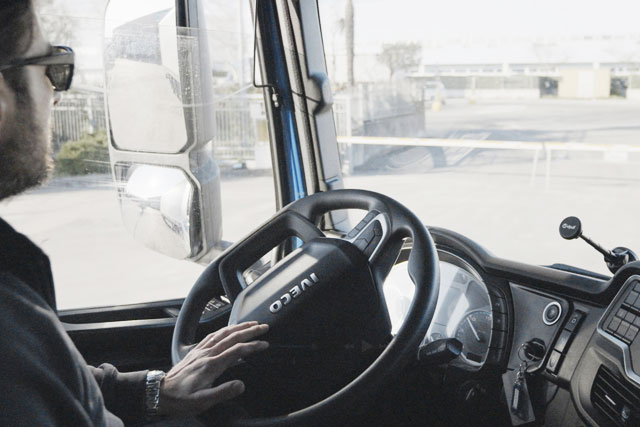
There is another challenge that risks becoming just as structural as rising fuel costs: the shortage of professional drivers.
This is not simply a question of numbers. Above all, it is a matter of dignity, working conditions, and fair compensation. Drivers spend long hours on the road, often waiting to load or unload goods in inadequate conditions, while pay levels frequently fail to reflect the responsibilities associated with the profession.
As a result, younger generations are increasingly reluctant to enter the industry, while experienced drivers are leaving it.
To reverse this trend, several actions are needed:
- Improve working conditions throughout the logistics chain, including rest areas, waiting times, and infrastructure;
- Ensure drivers are paid fairly and that their responsibilities are properly recognised;
- Allow transport companies to operate profitably, because businesses forced to work at a loss cannot provide decent working conditions or invest in their workforce.
Rules, Stability, and a Clear Vision for Sustainable Logistics
The logistics and freight transport sector is at a crossroads. The energy crises of recent years have accelerated the search for more resilient business models, including the adoption of HVO (Hydrotreated Vegetable Oil), a renewable fuel compatible with existing internal combustion engines, electric vehicles for urban distribution, load optimisation, and route efficiency through digitalisation.
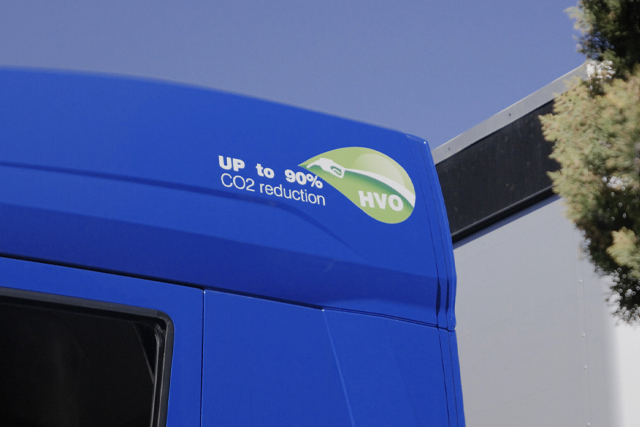
These are not immediate solutions, but they represent a necessary path towards a more sustainable logistics system that is less dependent on diesel price fluctuations.
Fuel price volatility is a recurring challenge, but the road haulage sector can no longer afford to manage it as a perpetual emergency. Stable regulations, automatic freight rate adjustment mechanisms, stronger industry representation, and dignified working conditions for drivers are essential.
Logistics is not a supporting industry — it is the backbone of the real economy. Recognising its strategic value is in everyone’s interest.
